Healthcare & Lifesciences — about the project
A multi site hospital and clinical research operation with 3,200 employees, including clinicians, nurses, lab technicians, and support staff, needed a confidential channel that handled both standard workplace grievances and patient safety reports, with the kind of time criticality clinical environments require.
Sector
Healthcare & Lifesciences
Workforce
≈ 3,200 across 5 facilities
Patient safety concerns and staff grievances flowed through the same email inbox. The triage logic was 'whoever opened it first.'
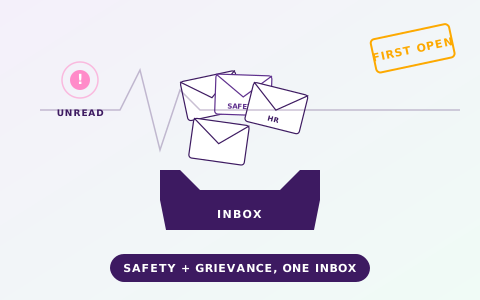
A nurse who saw a colleague behaving unsafely had nowhere to file the report that wasn't either the colleague's direct line manager or a generic ethics inbox monitored by an admin assistant. Mandatory reporting timelines existed but weren't enforced by any system. Some patient safety reports sat for days. The medical director was alerted to a serious incident through a clinical incident report system that had no link to the grievance system that should have caught the underlying behaviour weeks earlier.
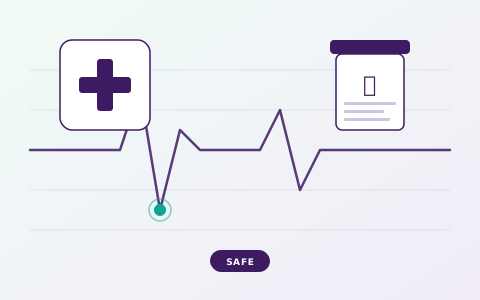
Specialist intake categories. Clinical grade SLA enforcement. Cross link to incident reporting.
açai Hear was configured with specialist intake categories such as patient safety, clinical conduct, workplace conduct, and regulatory disclosure. Each routed to a dedicated owner with a category specific SLA. Patient safety cases acknowledged within 15 minutes; critical workplace conduct cases within 4 hours; standard grievances within 24 hours.
The platform integrated with the existing clinical incident reporting system so that a grievance involving clinical conduct automatically created a linked record on both sides. The medical director and the People Operations head saw the same case from their respective angles. The AI counsellor was tuned to recognize escalation language and route accordingly without waiting for human triage.
Critical-case acknowledgement under SLA went from 'sometimes' to 94%, and the joint reporting closed a real risk.
94% of critical tagged cases received their first owner action inside SLA in the first 90 days, up from a measured baseline of 41%. Patient safety report volume rose, but the median time to investigation halved.
Two months in, the joint clinical and HR reporting pathway caught a single incident that, under the old system, would have triggered a clinical safety review without ever surfacing the underlying staff conduct issue. The medical director's review described the outcome as 'the kind of catch the old process couldn't have made.'