
FMCG & Retail — about the project
A regional FMCG and retail chain with 12,000 frontline employees across more than 200 store locations needed a complaint channel that worked from a phone, in a break room, in any language the workforce actually speaks. The previous system, a paper form mailed to head office, captured fewer than 30 cases a year.
Sector
FMCG & Retail
Workforce
≈ 12,000 frontline
Frontline associates didn't have laptops, didn't trust head office, and didn't have time. The complaint channel may as well not have existed.
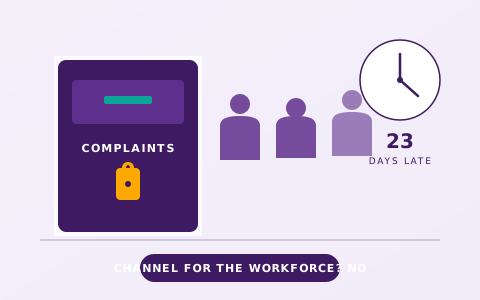
Store associates worked shift patterns that left no overlap with HR business hours. The grievance form lived on a corporate intranet that required a laptop login. Most of the workforce didn't have one. Of the few cases that did make it to head office, the average time from incident to report was 23 days. Memory had decayed and witnesses had rotated out by then. Senior leadership only learned about regional patterns when a regulator did.
QR codes on every break room poster. Vernacular voice intake. Manager blind routing.
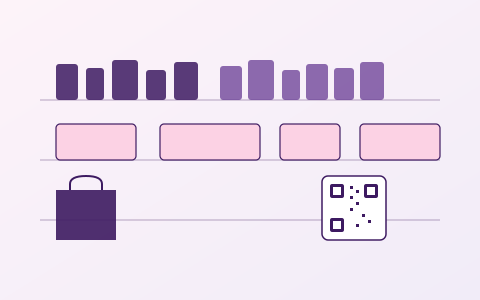
açai Hear deployed a QR code in every store break room and on the back of every employee ID card. Scanning opened a portal that worked on any phone, in eight regional languages, with full voice note support. The AI counsellor handled the conversation in the employee's preferred language and produced a translated case file for the regional HR partner.
Routing rules ensured cases naming a store manager never landed in that manager's queue. Cases were aggregated regionally so head office could see store level and district level patterns without exposing individual identities. Every reported case included a follow up channel the employee could check from the same QR coded portal.
240+ cases filed in the first quarter of operation. Three regulatory disclosures avoided.
Case volume rose 3.4× year over year, not because the workforce was more aggrieved but because the channel finally worked. 78% of intake happened on personal devices outside of work hours, vindicating the anonymity guarantee. Average time from incident to report dropped from 23 days to 4.1 days.
More importantly, the regional pattern detection caught two serial offender supervisor cases that the old paper system would never have surfaced. The legal team estimated three potential class action exposures avoided in the first 12 months, with documentation strong enough to satisfy the relevant labour boards.